
Article | Source: Campus Sanofi · Read time: 3 minutes
Allergy symptoms that won't go away? It could be Chronic Nasal Polyps
Author: Sanofi Editorial Team
If you've had a stuffy nose, facial pain, or a reduced or lost sense of smell for over 12 weeks, it might not be allergies—it could be Chronic Nasal Polyps (Chronic rhinosinusitis with nasal polyps, CRSwNP).1–5 Chronic Nasal Polyps symptoms and allergy symptoms can feel very similar, which is why they're often confused.2 However, CRSwNP involves long-term inflammation of the nose and sinuses that does not go away on its own.3,4 An ear, nose, and throat (ENT) specialist can help you get the right diagnosis and treatment to improve how you feel day to day.1

Are your symptoms a result of allergies or something else?
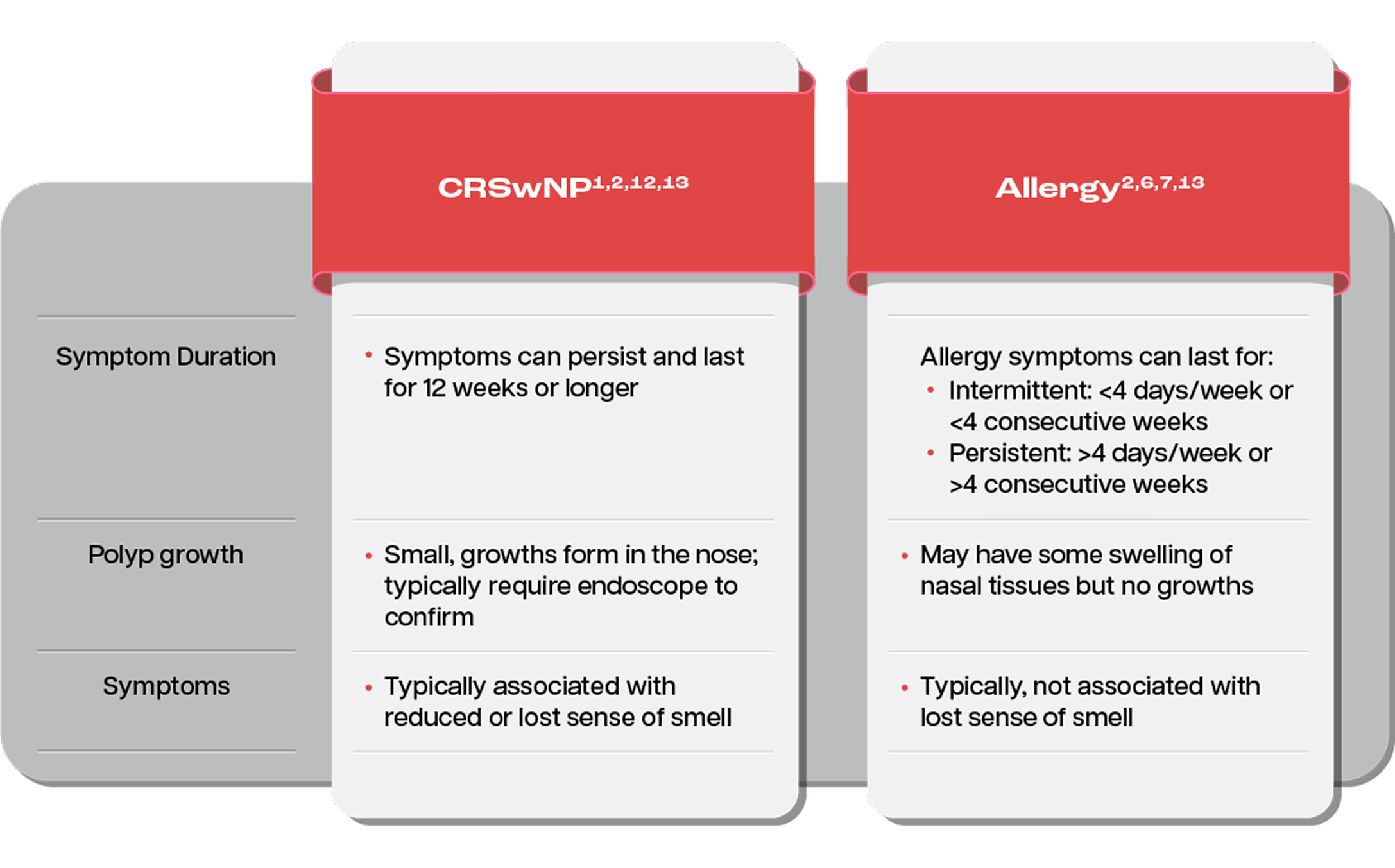
If you have an allergy, you might be familiar with symptoms like a stuffy or runny nose. These are also common symptoms of Chronic Nasal Polyps (Chronic rhinosinusitis with nasal polyps, CRSwNP) too, which can make it hard to tell the two conditions apart.2 But there's a key difference: allergies typically cause sneezing, itching, and short-term swelling in response to triggers like pollen, while CRSwNP involves long-term inflammation in your nose and sinuses.2,3,5–7
Common symptoms of Chronic Nasal Polyps (CRSwNP)1–5
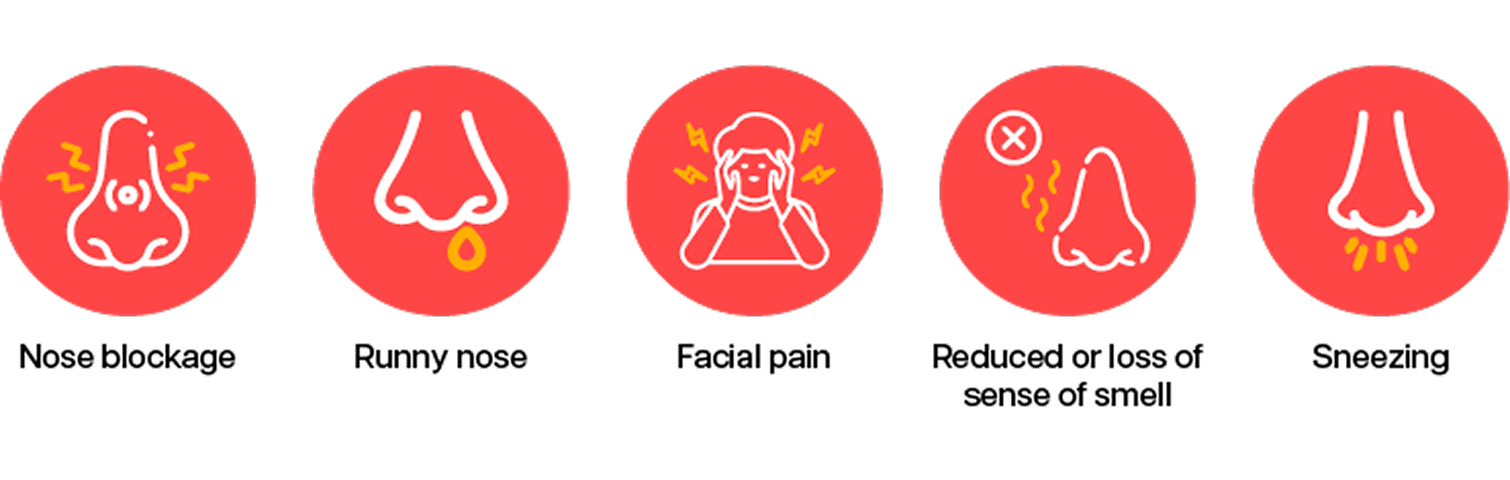
If you've experienced symptoms like a blocked or runny nose, facial pain from sinus pressure (pain around the face) or smell loss for more than 12 weeks, it's worth speaking to a doctor to find out what's really going on.1,2
Chronic Nasal Polyps symptoms vs. Allergy symptoms
Key facts about Chronic Nasal Polyps (CRSwNP)
- CRSwNP affects approximately 3% of adults across Western countries10
- CRSwNP is most common in people aged 40–59 years2,5,11
- The condition causes swelling in the lining of your nose and sinuses,5 which can increase mucus production and makes it harder to breathe3,4
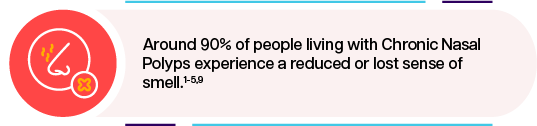
- Nasal polyps can block your nose and make it difficult to breathe and smell. No one knows why only some people develop nasal polyps and others don’t1–5,9
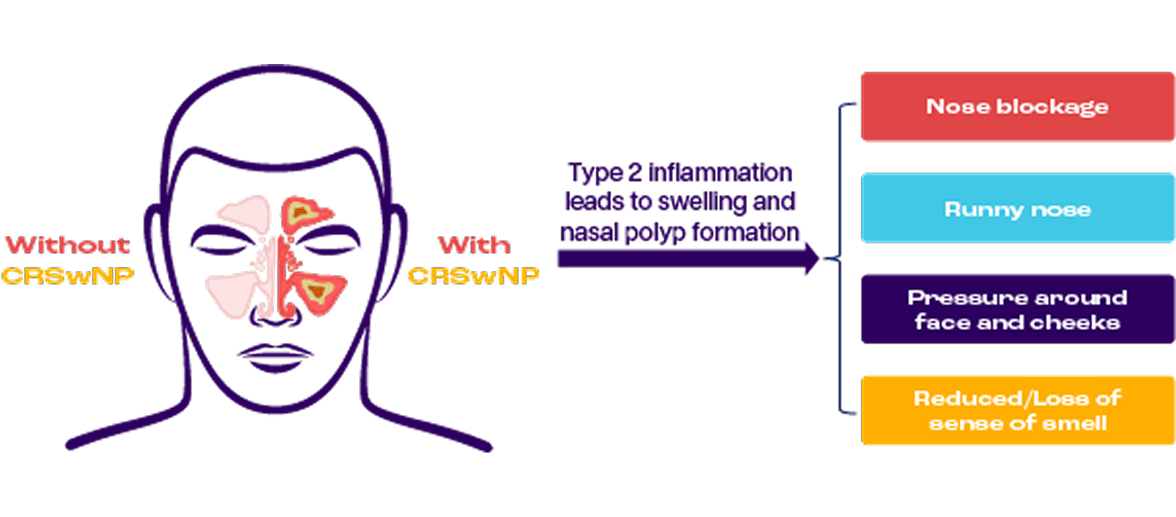
The hidden connection between Type 2 inflammation and Chronic Nasal Polyps (CRSwNP)
Inflammation is your body's natural response to injury, illness or something it wants to get rid of, like a virus. For many people with CRSwNP, a specific type of inflammation – Type 2 inflammation, is driving sinus problem symptoms. Type 2 inflammation happens when your immune system responds to a trigger, like an allergen, but doesn't ‘switch off’ when it has gone away. The swelling in your nose and sinuses continues, which over time causes your symptoms and nasal polyps to develop.3,4
Learn more about the role of Type 2 inflammation in Chronic Nasal Polyps (CRSwNP)
Type 2 inflammation can be an underlying driver of long-term CRSwNP symptoms3,4
Understanding more about Type 2 inflammation (Chronic Nasal Polyps Type 2 inflammation) can support conversations with your doctor and help you find the right treatment to ease your symptoms.1,5 Research shows that treatments targeting Type 2 inflammation can help improve how you feel day to day.3,5,8
Get the right diagnosis: Partner with your doctor
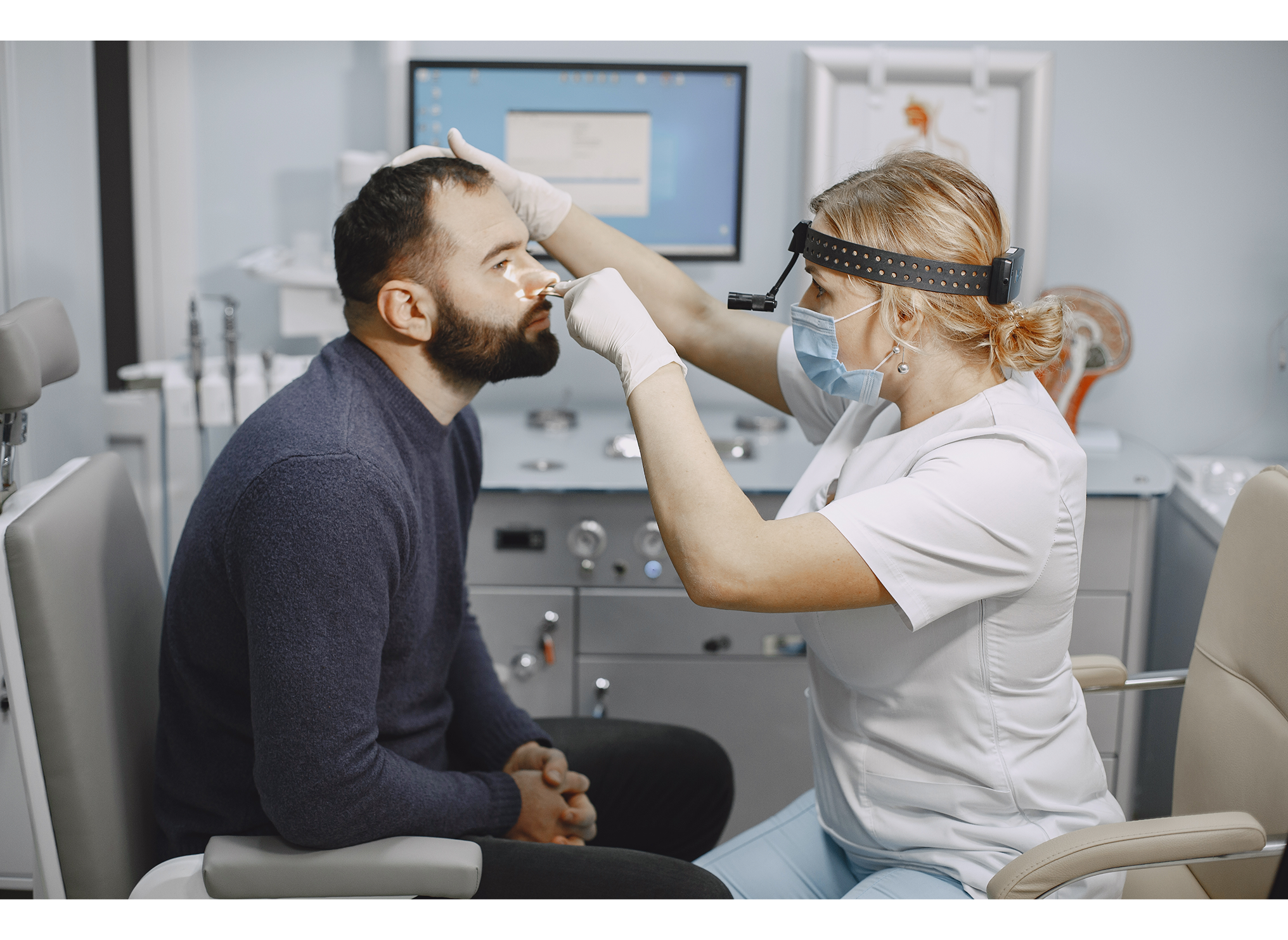
Have your sinus problem symptoms lasted more than 12 weeks? If so, it's worth speaking to your doctor – even if you think they're caused by your allergies. They can help you find out whether it's CRSwNP and recommend treatment to manage your symptoms.1,2,12,13
To check whether it’s CRSwNP, your specialist may:1
- Ask detailed questions about your symptoms and how long you’ve had them
- Look inside your nose and sinuses (anterior rhinoscopy or nasal endoscopy)
- Recommend tests to get a clearer picture, such as
- Skin prick test to check for related conditions like allergies or allergic rhinitis
- CT scan for detailed sinus imaging
- Smell test
Getting the right diagnosis is the first step to getting your sinus problem symptoms under control and feeling like yourself again.

Key points
- CRSwNP affects around 3% of adults in Western countries and is often mistaken for allergies2–4,10
- Allergy symptoms and Chronic Nasal Polyps symptoms can feel very similar – both can cause a stuffy or runny nose, so it's important to see a doctor to get the right diagnosis1,2
- If symptoms like a stuffy nose, facial pain, reduced or lost sense of smell have lasted more than 12 weeks, it's worth seeing a specialist1–5
- Understanding whether Type 2 inflammation is driving your nasal polyps symptoms can help you and your doctor find more effective treatments and improve how you feel day to day1–5,8
Actions you can take
- Complete the Chronic Nasal Polyps symptom checker [Chronic Nasal Polyps symptom checker/Countries to add country-specific URL].
- Use the Doctor Discussion Guide to prepare for your next appointment [Manage CRSwNP with helpful tools and checklist/Countries to add country-specific URL].
- Find a specialist near you [Countries to add country-specific URL].
References
- CRS Patient Empowerment Guide – EUFOREA. Available at: EUFOREA/CRS-patient-empowerment-guide/.Accessed on 11 March 2026.
- Fokkens WJ, Lund VJ, Hopkins C, et al. European position paper on rhinosinusitis and nasal polyps 2020. Rhinology. 2020;58(Suppl S29):1–464. doi:10.4193/Rhin20.600
- Bachert C, Hicks A, Gane S, et al. The interleukin-4/interleukin-13 pathway in type 2 inflammation in chronic rhinosinusitis with nasal polyps. Front Immunol. 2024;15:1356298. doi:10.3389/fimmu.2024.1356298
- Maspero J, Adir Y, Al-Ahmad M, et al. Type 2 inflammation in asthma and other airway diseases. ERJ Open Res. 2022;8(3):00576-2021. doi:10.1183/23120541.00576-2021
- Bachert C, Bhattacharyya N, Desrosiers M, Khan AH. Burden of disease in chronic rhinosinusitis with nasal polyps. J Asthma Allergy. 2021;14:127–134. doi:10.2147/JAA.S290424
- Wheatley LM, Togias A. Clinical practice. Allergic rhinitis. N Engl J Med. 2015;372(5):456–463. doi:10.1056/NEJMcp1412282
- Liva GA, Karatzanis AD, Prokopakis EP. Review of rhinitis: classification, types, pathophysiology. J Clin Med. 2021;10(14):3183. doi:10.3390/jcm10143183
- Mullol J, Azar A, Buchheit KM, Hopkins C, Bernstein JA. Chronic rhinosinusitis with nasal polyps: quality of life in the biologics era. J Allergy Clin Immunol Pract. 2022;10(6):1434–1453.e9. doi:10.1016/j.jaip.2022.03.002
- Yan X, Whitcroft KL, Hummel T. Olfaction: sensitive indicator of inflammatory burden in chronic rhinosinusitis. Laryngoscope Investig Otolaryngol. 2020;5(6):992–1002. doi:10.1002/lio2.485
- Teeling T, Djouder C, Laurens H, et al. Nasal polyp syndrome: a patient-centred term for CRSwNP by EUFOREA. Front Allergy. 2024;5:1372919. doi:10.3389/falgy.2024.1372919
- Merrill T, Kanaan A. Managing chronic rhinosinusitis with nasal polyps in the elderly: challenges and solutions. Clin Interv Aging. 2022;17:685–698. doi:10.2147/CIA.S279765
- Orlandi RR, Kingdom TT, Smith TL, et al. International consensus statement on allergy and rhinology: rhinosinusitis 2021. Int Forum Allergy Rhinol. 2021;11(3):213–739. doi:10.1002/alr.22741
- Swift AC, Carrie S, de Souza C, eds. Contemporary Rhinology: Science and Practice. Springer; 2023:309–320. doi:10.1007/978-3-031-28690-2
